
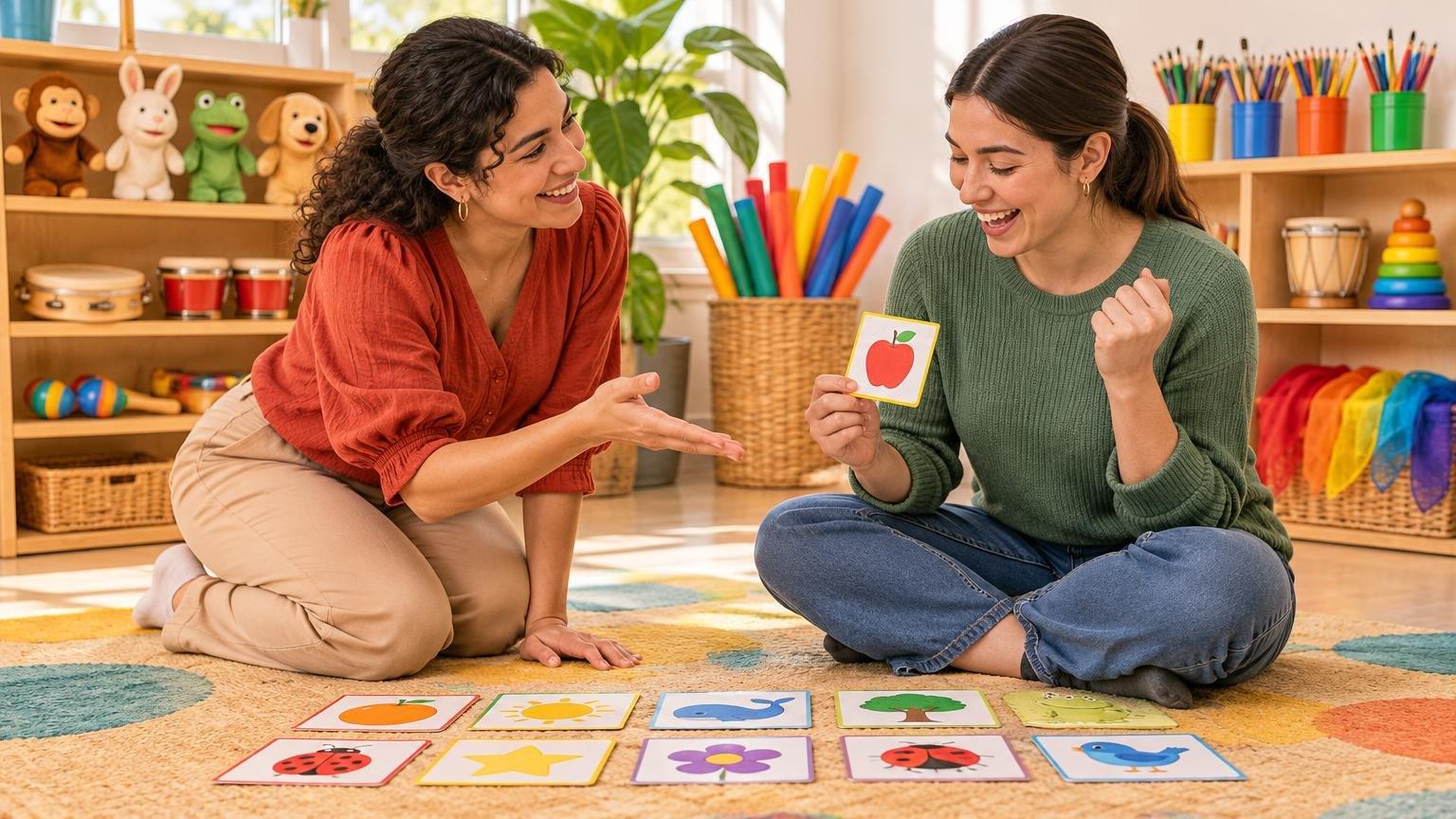
A Spanish games class for preschoolers can help young children feel comfortable hearing and using a new language without turning every word into a test. For ages 3 to 5, confidence matters just as much as vocabulary. Children are still learning how to share ideas, ask for help, and express feelings in every language they know.
At Casa Immersion in Ridgewood, New Jersey, we make room for children to laugh, move, copy, listen, and try. Through small-group play, music, storytelling, art, everyday conversation, and games, Spanish becomes something children experience together, not something they simply study.
Speaking Spanish Feels Like Play, Not a Test
Young children learn best when they can be active and curious. A game gives them a reason to use Spanish without putting them on the spot. Instead of asking a child to recite a list of colors, we might invite them to find the matching card, choose an object, or help a friend during a turn-taking activity.
That shift can make a big difference. When children are busy playing, they often worry less about whether they said a word perfectly. They can join in with a smile, a gesture, a sound, or one familiar word. Each kind of participation counts.
In our play-based classes, children may begin by watching and copying. Before long, they may repeat a greeting, call out an animal name, or respond when they hear a familiar phrase. Spanish starts to feel friendly because it is tied to positive moments with teachers and classmates.
How Games Build Confidence One Small Win at a Time
A Spanish games class for preschoolers creates many natural chances to hear the same useful words in different ways. During a matching game, children may hear color words. During a movement activity, they may hear action words. While passing an object, they may practice greetings, names, or simple requests.
The activity changes, but the language returns. That kind of repetition can feel fun rather than repetitive because children are focused on what they are doing next.
Small successes are worth noticing. A preschooler does not need to hold a full conversation to show growing confidence. We often see meaningful participation in moments such as:
- Saying hola when class begins
- Choosing rojo or azul during a game
- Repeating an animal sound or animal name
- Answering a simple question with a word or gesture
- Joining a familiar song with a classmate
These are early ways children learn, "I can do this." We celebrate effort and participation, not perfect pronunciation. When children feel safe trying, they are more likely to keep trying.
Movement and Repetition Make Words Stick
Preschoolers use their whole bodies to understand the world. That is why movement can be such a natural part of early Spanish learning. When children hear saltar while they jump, bailar while they dance, sentarse as they sit down, or correr during a playful activity, the word is connected to a real experience.
Music and routines also give children language they can expect. A hello song, a cleanup phrase, or a repeated question before taking a turn can become familiar quickly. Knowing what is coming next gives many children the comfort they need to join with a clap, a motion, or a word.
Storytelling adds another layer of support. We can use pictures, puppets, facial expressions, and actions to make the meaning of a story clear. Children do not need an English translation for every Spanish word when they can see what is happening and take part in the story.
It also helps to remember that listening comes before speaking for many children. A child who points to azul, follows a simple direction, or does the right action during a song is showing understanding. Watching closely, listening, and participating quietly are all meaningful signs that confidence is growing.
Small Groups Create Space to Participate
Every child has a different way of joining a group. Some children happily repeat every new word they hear. Others may watch for a while, then participate when they feel ready. In a small group, we can notice those differences and offer invitations that feel warm and encouraging instead of demanding.
Turn-based games are especially helpful because they create short, manageable speaking moments. A child may name an object, choose a color, greet a classmate, ask for a card, or respond to a simple prompt. These interactions are brief, but they show children that Spanish can help them connect with other people.
Peers matter, too. When children see classmates singing, moving, answering, and making mistakes without embarrassment, Spanish can feel more approachable. A child may first copy a friend, then begin using the same word on their own. That is a normal and welcome part of group learning.
Our small-group setting lets us model language naturally and meet children where they are. The goal is not to compare one child with another or expect immediate fluency. Instead, we want children to associate Spanish with belonging, shared play, and positive relationships.
Bring Spanish Confidence Into Everyday Moments
You can support the comfort your child builds in class by keeping Spanish playful at home. There is no need to turn daily routines into quizzes. Use a few familiar words during moments you already share, and let your child respond in whatever way feels easy.
Simple ideas include:
- Say hola and adiós during arrivals and goodbyes
- Use gracias during everyday exchanges
- Name colors while drawing, sorting, or playing
- Practice animal names and sounds during pretend play
- Ask your child to teach you a favorite song, game, movement, or story
Letting your child lead can be especially powerful. Even if they remember only a few words, they get to show what they know. That pride can encourage them to use Spanish again.
Confidence grows through repeated, happy experiences, not pressure. When children are free to listen, move, laugh, gesture, and speak at their own pace, Spanish can become a natural part of play and connection.
Help Your Child Speak With Greater Ease
At Casa Immersion, we create engaging opportunities for young learners to use Spanish in ways that feel comfortable and fun. Discover how our Spanish games class for preschoolers can support your child's growing communication skills. If you have questions about our program, contact us to learn more.